
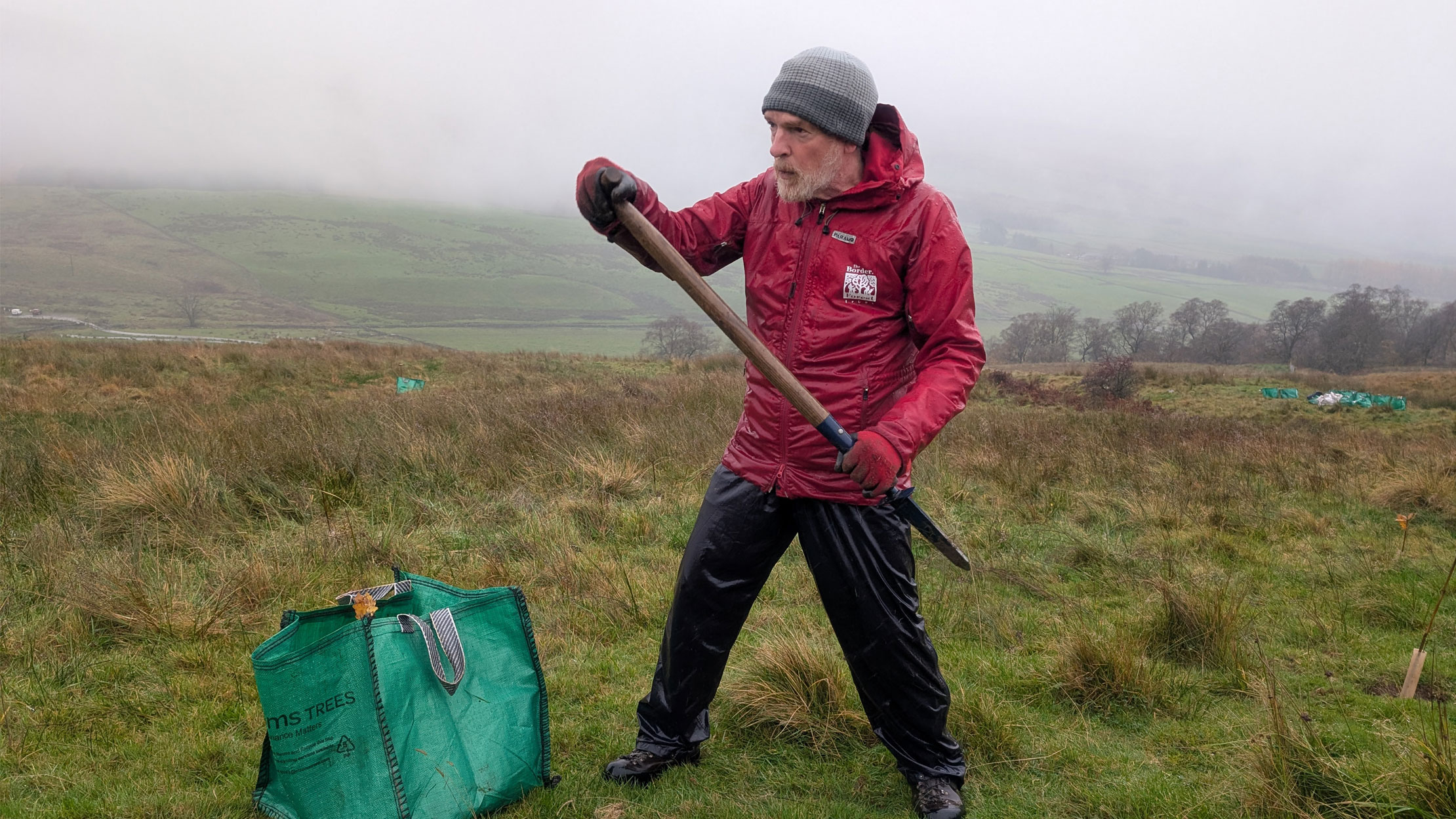
Tree planting: Top tips from the Borders Forest Trust
By Charlotte Henderson on 09 December 2025
Since 1996, Borders Forest Trust (BFT) has been dedicated to restoring natural habitats and woodlands in the Scottish Borders.
Adrian Kershaw, Wild Heart Engagement and Site Officer at BFT, has developed extensive knowledge of the area and expertise in tree planting during his career.
On our latest volunteering day with BFT, Adrian gave us a brilliant hands-on demonstration of appropriate planting techniques and explained how different soil types support different species.
Creating mixed-species forests
BFT champions the creation of mixed-species forests. They source their saplings from Elsoms Trees, a unique supplier encouraging the use of local nursery facilities while offering advice and support.
On our most recent volunteer day, BFT provided a wide variety of trees to plant, including:
- Grey Willow, Goat Willow, and Bay Willow
- Alder
- Birch
- Bird Cherry
- Blackthorn
- Hazel
- Hawthorn
- Holly
- Juniper
- Oak
A step-by-step guide to planting native trees in the UK
Learning these new skills and insights from Adrian inspired us to think about how we can use our platform to share this knowledge and encourage others in the UK to plant their own trees or volunteer with incredible organisations like BFT.
You will need:
- Gloves, sturdy footwear and weatherproof clothing
- A tree-planting spear or spade
- A bamboo cane (stakes can also be used)
- A mallet or hammer (if using stakes)
- Tree guards (there are a few biodegradable options out there; the type used in the video was made from wood pulp and vegetable oil)
- Finally, tree saplings (see our list of a few native species above)
 1. Find the right kind of ground
Make sure that the ground you are planting into is the right moisture for the tree you are planting. In the video above, Adrian is planting Alder which thrives in wet ground – if there are reeds growing around, that is a good sign that the ground is wet enough. It is also helpful at this stage to make sure there are no boulders beneath the soil that could stop your tree from taking root. You can do this by sticking your spear into the ground and pushing down with your foot to check if you hit any rock below.
 2. Clear away the top level of vegetation
This process is known as ‘screefing’. In a wide stance above your desired area and holding your spear like a canoe paddle, begin to hack at the vegetation in a rowing motion (be mindful that your legs are spread far enough that you don’t risk hitting your shins with your spear!). You are looking to clear enough vegetation to leave about a 30cm diameter patch of soil.

3. Dig a hole
Make a hole by sticking your spear into the ground and twisting. The depth of the hole you make should be roughly the same as the length of roots of your sapling. You should avoid creating a hole that is too deep or else water can get underneath and freeze, pushing the sapling out of the ground. However, it should still be just deep enough that the roots are below the ground.

4. Plant your tree sapling
Take your tree sapling along with your cane and insert both into the hole in the ground at the same time, ensuring that your cane is secure and your sapling is below ground level. You can also use your hands or a boot to pat around the tree to firm up the soil on top. If you are using a stake instead of a bamboo cane, secure your stake into the ground using your mallet or hammer.

5. Apply your tree guard
Take your tree guard and carefully wrap it around both the cane and the sapling before pushing it into the ground – it only needs to go in around 1cm. If you are using stakes instead of bamboo canes, affix a cable tie from the tree guard to the stake.
Firefly would like to personally thank Adrian Kershaw for a brilliant tree-planting experience and for inspiring us with his knowledge and passion for restoring native woodland habitats to the Scottish Borders. We would highly recommend the organisation to others, to learn more about the fantastic work that BFT do and how you and your team could collaborate with them, visit: bordersforesttrust.org



Thank you
Success! We've received your message and will get back to you as soon as possible. We look forward to chatting to you.

“Thank you so much for your work on the report infographics, and especially the speedy turnaround – they really helped us get to where we needed to be in time for the official launch and circulation to press yesterday.
We’ve had loads of coverage for the recent report today and hoping to get more across the week. Also a huge thanks again for your work on the branding and templates generally. Working the report up using the Citizens Advice Scotland report template didn’t take me long at all and we’re so very happy with how it looks!”
Erin Gray
Service Communications Manager
Citizens Advice Scotland